
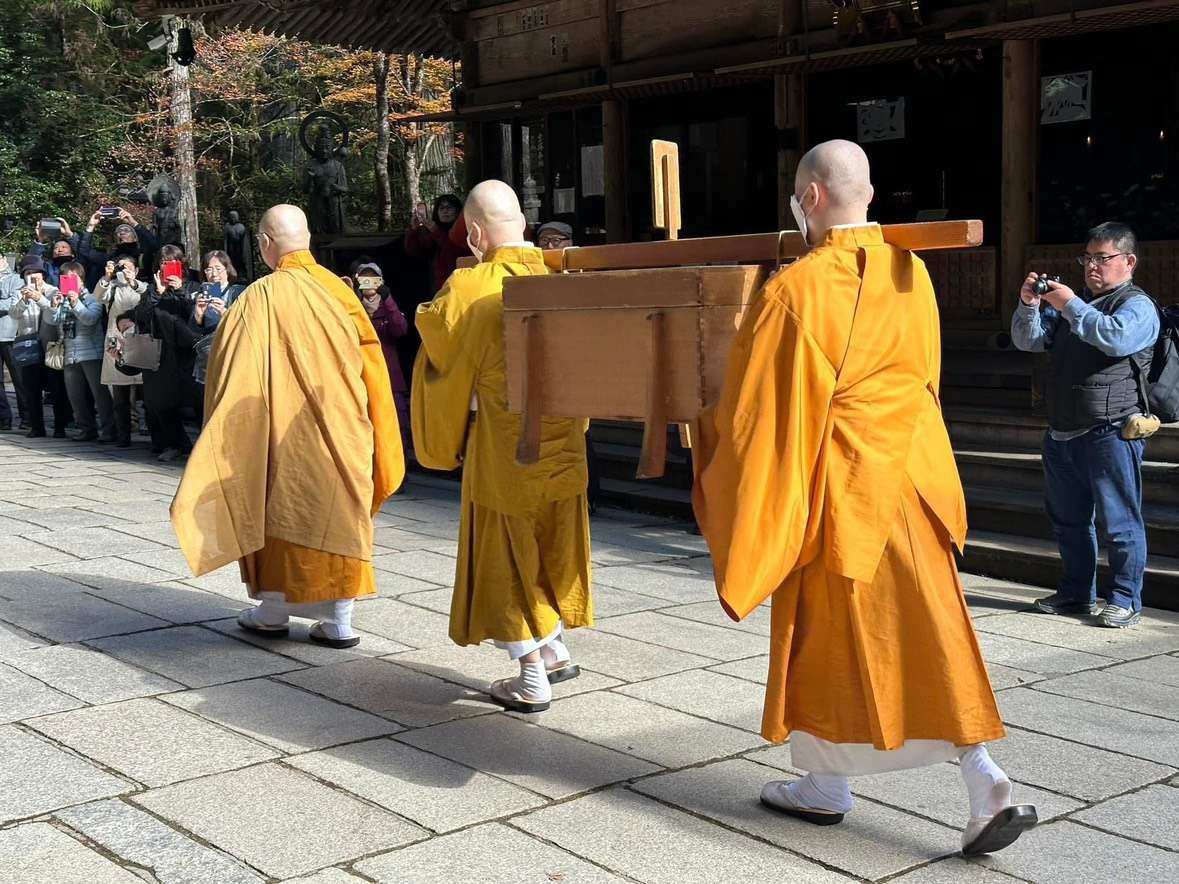
As we work closely with temples and spiritual landmarks across Japan to offer the best, most authentic experiences to travelers, we recently had the profound opportunity to meet with a practicing Esoteric Buddhist monk currently serving in the sacred area of Koyasan. This was a wonderful opportunity for us to uncover the feeling and spirituality of a monk’s daily life, the path that led him there, and the spirituality that underpins it all.
What surprised us most upon meeting him was his youth. At just 28 years old, he belongs to the same generation as us. Naturally, this raised our curiosity: what led a young person living in the modern world to choose this path?
A Day in the Life of a Monk | Where Practice and Daily Life Become One
“What does a typical day look like for a monk?”
While daily routines may vary slightly from temple to temple in Koyasan, the day generally begins with morning prayers at 6:30 a.m. Afterward, monks carry out their individual practices and daily duties according to their roles. However, their responsibilities extend beyond spiritual training alone. In the evenings, they are also involved in the operation of temple lodgings (shukubo), welcoming visitors from around the world.
Quiet spiritual practice and interaction with guests, these two aspects are naturally interwoven into daily life.
“Being a monk is not a profession; it is a way of life,” he shared in a calm and gentle tone.
Time spent in prayer and time spent welcoming others are both part of the same continuous practice.
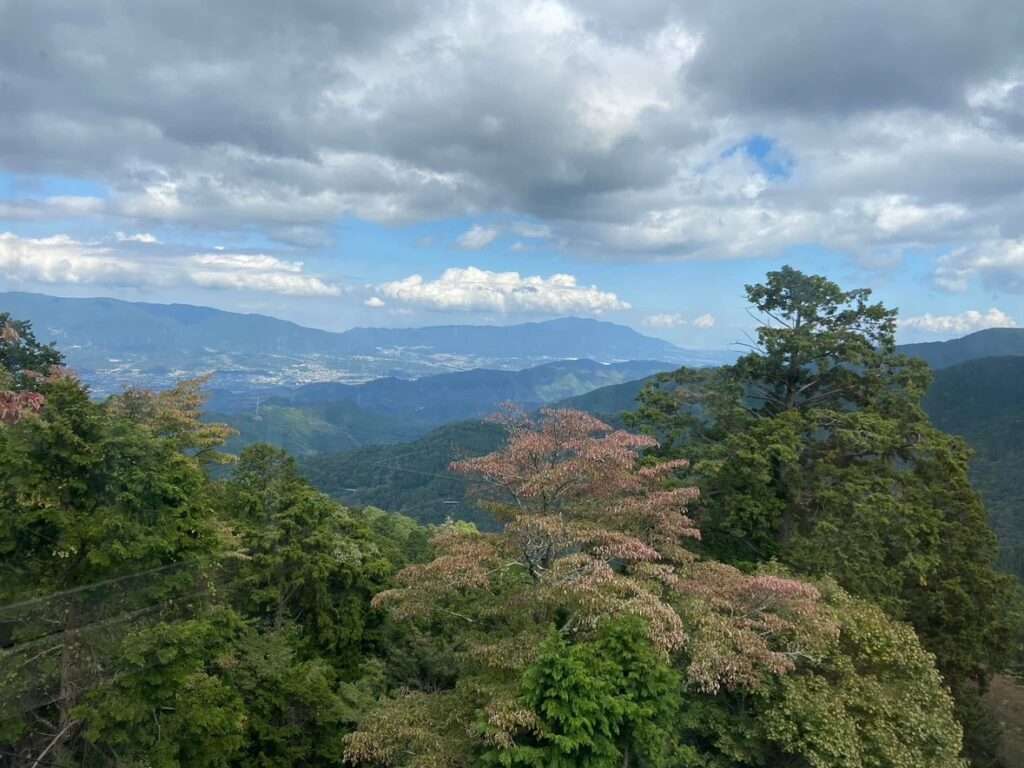
Why He Became a Monk | Guided by the Flow
“Why did you become a monk, and why Koyasan?”
Not all monks are born into temple families, and he is no exception, he comes from a non-religious household.
The origin of his path can be traced back to his experience during the Great East Japan Earthquake when he was in the sixth grade. In the six years that followed, during junior high and high school, he participated twice in survey-based activities related to disaster recovery in Ibaraki Prefecture. Through these experiences, he began to question, “How can people live in peace?”
His interest in the teachings of Kukai deepened over time. However, his decision to pursue this path was not driven by a strong initial determination, but rather by a sense of being guided. After failing to gain admission to his first-choice university, he enrolled in Koyasan University at his mother’s suggestion, the only university he was accepted into.
“Rather than a strong will, it felt like I arrived here naturally, guided by the flow,” he reflected calmly.
Personal Practice and Living for Others
“What are your thoughts on sharing Buddhist teachings with visitors?”
In his words, a monk is both someone who pursues personal spiritual training and someone who lives for the benefit of others. “I believe it is also our role to share teachings with those who come here carrying worries,” he explained. He places equal importance on both practice and service.
He also emphasized that he does not distinguish between Japanese and international visitors. Instead, he approaches everyone with the mindset of “welcoming those who come, and not chasing those who leave.”
The question he constantly keeps in mind is: “What is this person seeking by coming here?”
On Practice Experiences and the Risk of “Thinking You Understand”
“What do you think about people ‘understanding’ Buddhism through short-term temple stays?”
He cautioned against the assumption that Buddhism can be fully understood through short-term experiences. Esoteric Buddhism, in particular, is not something that can be easily grasped. “It is important not to assume you understand,” he said.
He views Buddhism as both a religion and a philosophy for living.
“If you can take even one meaningful insight home with you, that is enough.”
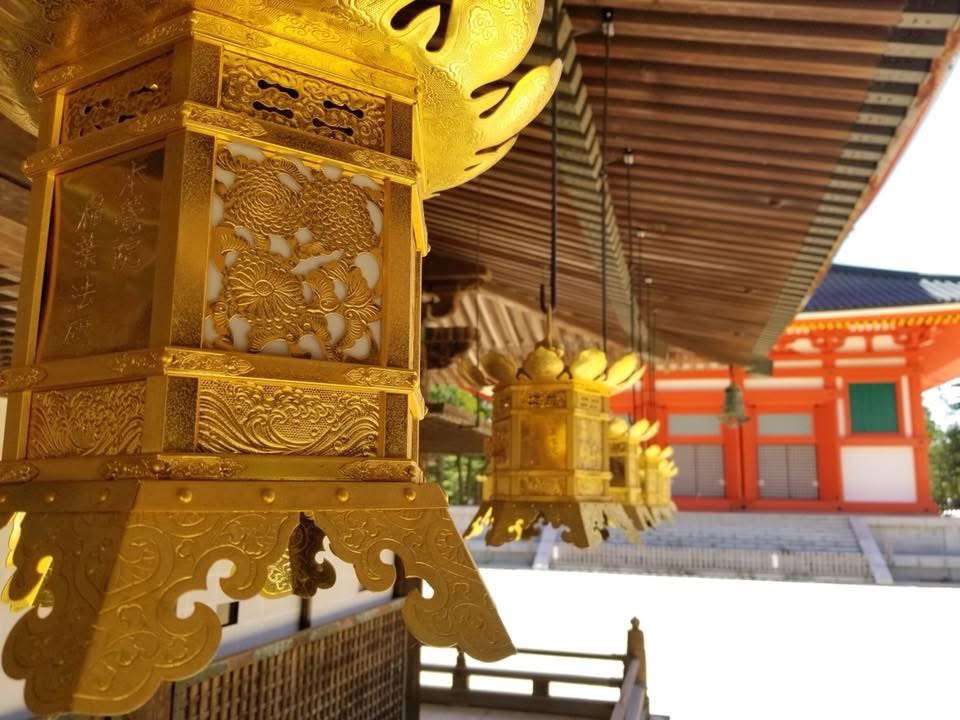
What Visitors Seek | Finding a Sense of Peace
“What do you feel visitors seek when coming to Koyasan?”
He observes that while people come for various reasons, some for cultural curiosity and others for deep self-reflection, most are seeking a sense of peace. He also noted a difference in perspective between visitors: Japanese guests often view the experience through the lens of tradition, while international visitors approach it as a form of active exploration, trying to understand the teachings through direct experience.
For beginners, he recommends sutra copying (shakyo), as it is relatively accessible and serves as an entry point to Buddhist teachings.
This mindfulness even extends to the table; he explained that the word shojin (as in shojin ryori, the traditional buddhist cuisine) means to devote oneself diligently to practice, making food a vital part of spiritual discipline.
A Modern Monk: Humor and YouTube
“What do you do in your free time outside of your life as a monk?”
He is engaged in a range of activities beyond the temple that many may find unexpected. In addition to serving as a part-time religious studies instructor at a private school, he also maintains a consistent presence online.
Through his videos, he explains the teachings of Buddhism and Esoteric Buddhism while offering glimpses into the daily life of a monk. His approachable style, often infused with a touch of humor, leaves a strong impression and makes Buddhism feel more accessible to modern audiences.
In his private time, he enjoys driving as a form of “pure relaxation.” These simple, human moments seem to bring balance to his daily life.
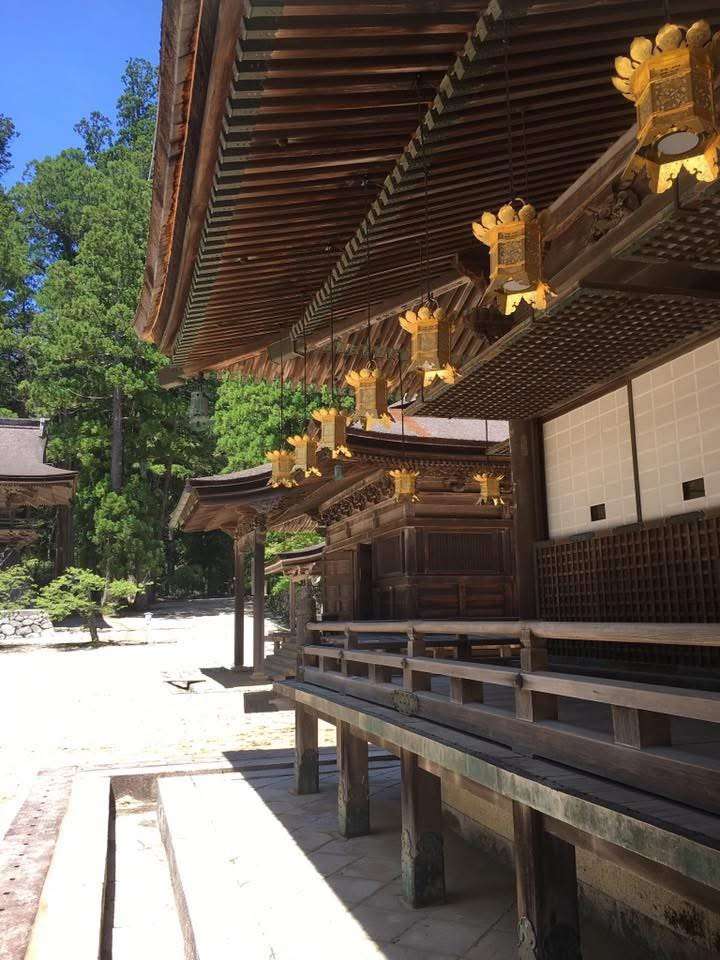
Conclusion | Discovering What Lies Within
Throughout our interview, the monk’s calm demeanor conveyed a strong inner conviction. He reminded us that the role of temples today is to support a society where people can feel secure and emotionally supported.
One concept in esoteric Buddhism that resonated deeply was Sokushin Jobutsu (attaining Buddhahood in this very body). “What matters is whether you can feel that the Buddha exists within you,” he shared. In a world of social media and constant comparison, he believes we can find peace by stepping away from the noise and realizing we do not need many things if we have richness in our hearts.
“It’s not about doing something extraordinary, but about how you live each day.” As he left to go back to Koyasan, those words remained with us, a reminder that the accumulation of small, mindful moments is what truly shapes a life.
If you would like to catch a glimpse into the daily life of a monk, have a look at our special Koyasan Discovery Tour, where you can immerse yourself in a traditional temple stay, partake in sacred morning rituals, and find your own sense of peace through the meditative art of sutra copying. Or if you would like to experience it your own way, send us a message and we will make sure to create the perfect spiritual stay for you!